Showing posts with label Superior Lexus Kansas City. Show all posts

Monday, June 3, 2013

SUPERIOR LEXUS IS NOW IN A NEW LOCATION & HAS TAKEN A NEW NAME: HENDRICK LEXUS KANSAS CITY

HENDRICK LEXUS KANSAS CITY
Formally Superior Lexus South
6935 W Frontage Rd, Merriam, KS 66203
888-236-1738 HendrickLexusKansasCity.com


SUPERIOR LEXUS HAS MOVED TO A NEW LOCATION!
Driving directions from Superior Lexus South to our new location,
Hendrick Lexus:  6935 W Frontage Rd, Merriam, KS 66203
Approx. drive time and distance: 15 minutes / 11.89 miles
  
Starting from Superior Lexus South

1. Head East on W 104 St/Indian Creek Rd           0.2 mi
2. Turn left onto W 103rd St Entering Kansas          0.2 mi
3. Turn left onto State Line RdDescription: https://maps.gstatic.com/mapfiles/transparent.png                                 0.3 mi
4. Take the ramp onto I-435 W/US-50 W                  4.4 mi 
Continue to follow I-435 W                                                  
5. Merge onto US-69 N via Exit 81                            6.1 mi
Continue on US-69 as it merges into I-35 NDescription: https://maps.gstatic.com/mapfiles/transparent.png             
6. Take exit 228A for 67th St                                     0.1 mi
7. Turn left onto W 67th StDescription: https://maps.gstatic.com/mapfiles/transparent.png                                        0.2 mi
8. Turn left onto W Frontage RdDescription: https://maps.gstatic.com/mapfiles/transparent.png                              0.1 mi 
Arrive at: Hendrick Lexus 6935 W Frontage Rd, Merriam


  Alternate rush our route best used when I-35 N is backed up:
  Follow previous directions 1-4, this should put you on US-69 N
     5.  Take the 75th St exit                                                               1.7 mi
     7.  Turn left onto 75th St                                                             0.3 mi
     8.  Turn right onto Kings Cove Dr.                                           0.04 mi
     9.  Take the first right onto W Frontage Rd                             1.1 mi
       Arrive at: Hendrick Lexus 6935 W Frontage Rd, Merriam, KS


NEW LOCATION… NEW NAME… SAME SUPERIOR PEOPLE!


SALES: 913-781-5100    *   SERVICE: 913-789-5173   *   PARTS & ACCESSORIES: 913-789-5166

Friday, January 4, 2013

Lexus Autonomous Driving Technology Teaser: 2013 CES


HighGearMedia.com, Friday, January 4, 2:01 PM 

By Nelson Ireson


The Consumer Electronics Show has, over the past several years, become more and more about automotive technology. This year, Lexus will be flaunting its latest, including its take on autonomous driving tech.

While the company is touting the system as if it were about to reach production, one look at the monstrosity in the video here shows it's still very much a matter of research and development--much like Google's similarly-outfitted autonomous cars.
That's not to say that the sensors and equipment, once adapted to the intended use, couldn't be made smaller and integrated into production cars. In fact, that's exactly what we expect to happen--we just don't expect it for several more years, at the least.
The whole idea of autonomous cars is a bit of a mixed bag for enthusiasts like ourselves. While we can appreciate the potential for safety advances, easier--and more productive--commutes, and even a possible reduction in traffic slow-downs, the idea of handing over all control of a high-speed vehicle to a computer that's, at best, only partially aware of its surroundings, well...that's another matter.   http://www.washingtonpost.com/cars/lexus-autonomous-driving-technology-teaser-2013-ces/2013/01/04/761f7a34-56a9-11e2-89de-76c1c54b1418_story.html

Thursday, November 29, 2012

At The LA Auto Show, Lexus Debuts A 500-Horsepower Hybrid

At The LA Auto Show, Lexus Debuts A 500-Horsepower Hybrid


Lexus unveiled its LF-LC Concept last month in Sydney, since its blue opal color is inspired by the blue opal found in the Australian Outback, but this week in Los Angeles is the first time Americans will have a chance to see the 500-horsepower hybrid up close.

The car is special, a crucial step for Lexus as the company fights to stay abreast of the alternative-drivetrain wars currently being waged at Audi, BMW, Mercedes-Benz. It’s going to have to be very good in order to gain traction against Lexus’s currently-stronger rivals, and Lexus has endowed the coupe with a 5.0 liter V8 engine backed up by two electric motors and a Ni-MH battery pack, all of which produce nearly 500hp and which will push the car to 60mph in 5.5 seconds. Top speed is 130 mph.


Along with sister-vehicle the LF-CC, the coupe will serve as design inspriation for the 2014 IS. Look for the rear bumper, front grille and wheel arches in production vehicles over the next few years.   Article from Forbes: http://www.forbes.com/sites/hannahelliott/2012/11/29/at-the-la-auto-show-lexus-debuts-a-500-horsepower-hybrid/

Tuesday, June 26, 2012

TOP 10 THINGS TO KEEP IN YOUR CAR


Hope for the best and plan for the worst. The simple saying with complex details is so often thought of relative to your career or finances, and rightly so, though it shouldn’t be overlooked in regard to your car. Even if you keep some travel-size supplies aboard for emergency grooming purposes, don’t overlook things for the car itself. Your cell phone is a must, but alone it can’t bail you out of every sticky situation. On the other hand, it doesn’t make sense to stash a few hundred pounds of provisions for everyday driving or even road trips. Strike a sensible balance with our top 10 things to keep in your car.


No.10 Tire gauge


A minute of your time every week can save hours if ever stranded, and it’s as easy as keeping a tire gauge in your car. It’s fundamentally simple and obvious that a small patch of tire at each corner is your only connection to the road. What’s less realized is how critical proper inflation is to car safety and tire wear. Take a huge step toward preventing nastiness by using a tire gauge (digital is best and still reasonably priced) when tires are cold -- before you drive. The ideal pressure will be indicated not on the tire itself but the driver’s doorjamb and in your owner’s manual.


No.9 Oil


Even if your car runs perfectly fine, doesn’t smoke , and you don’t have to top off the oil every time you gas up, keep a quart or two of oil ready. You won’t be able to forgo checking the dipstick often, the way you normally should. Instead, this emergency supply can be added roadside and allow you to limp your car to a safer place should the unforeseen happen. It‘s even more critical if yours is one of the many new cars requiring a specific kind of oil.


No.8 Cell-phone charger


Some newer cars have phone docking and charging capability as standard features, which we hope to see more manufacturers offer. If this isn’t built in on your car, have a basic charger on hand, and use it often. If your car quits and you have to deal with a dead car battery, you might not have the ability to charge a drained phone.


No.7 Flashlight


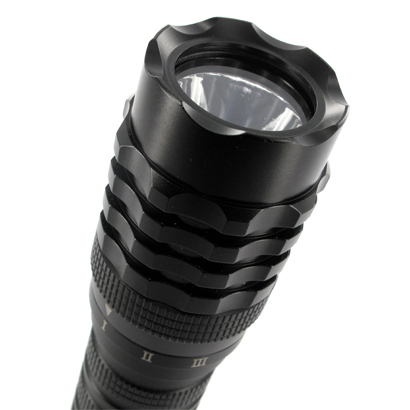
Yes, there is an iPhone app for a flashlight, and it can be extremely handy to have when the situation is inconvenient but not necessarily dire. It still doesn’t hold a candle to a proper flashlight, since it’s another big battery drain that was never really intended for use around a hot engine or poking around under a vehicle. Drop it once, game over. A good flashlight can withstand that and more while letting off more light.


No.6 Flat tire fixer


To save on expenses, space or weight, several new cars don’t have spare tires. They rely on either run-flats or sealant in a can. The latter isn’t bad to have regardless of how your car’s equipped, since even spares lose air when they’re left unchecked or can fail once in use. The products can be found with various brand names, but they more or less have the same functions of sealing and inflating. Certainly a convenience and potentially a must-have when the surface isn’t stable enough for a car jack or there isn’t the time and space to safely change your tire with traffic whizzing by just inches away. Just be sure the one you're buying is compatible with your tire type and won’t damage your tire pressure monitoring system once equipped.


No.5 Booster cables


Here’s another no-brainer for readers in cold climates who winterize their cars annually, but even desert dwellers need a boost now and then. As with some other things to keep in your car, check your owner’s manual to confirm the type of cables or booster system you can safely use. The traditional four-clamp setup may not be an option, or there may be specific points in your engine bay to serve as connectors, as opposed to the battery posts themselves. Just understand that a jump start is rarely the end of your problems; if you need it once, you’ll probably need it again unless other issues are addressed.


No.4 GPS and map


If your car doesn’t have a built-in navigation system, keep a portable GPS with you. Just don’t rule out having a map onboard. As good as factory and portable GPS units are, they still sometimes flake out or can’t grab a signal. Besides, if your car’s out of power, you’re out of luck. Even if your phone has the capability, signal strength could again pose an issue. With a map, your biggest problem is folding the thing properly, which really is just another lost art anyway.


No.3 Basic first-aid kit


With roadside surgeries at an all-time low, you don’t have to keep an elaborate arsenal of medical gear in your trunk, but, until help arrives, a small kit of the essentials can make a big difference. Things like bandages, burn cream, antibacterial ointment, and pain reliever aren't just things you will need for a family vacation. A poncho’s helpful too, functional as a makeshift blanket or to keep you dry when you’re stuck in the rain. Finally, a small extinguisher designed for automotive use keeps minor electrical and engine fires from getting out of hand.


No.2 Food and water


This isn’t just for Snowbelt readers. Food and water are things to keep in your car wherever you live or travel. Nothing elaborate here -- you’re not hauling around four-course meals for five. The idea is that you’ll have the bare minimum to keep you going when help could be many hours away or the weather extreme. Compact, healthy foods with long shelf lives, like energy or protein bars, are great choices. Have a few bottles of water, and replace them all from time to time.


No.1 Insurance information and vehicle registration


Any meeting of metal is never good, but being able to contact your insurance carrier and exchange information helps. As for registration, it seems fundamental to have proof that you, your car and its license plates all belong together. Some guys get lazy and fail to put their registration in the glove box, while others have purposely taken it out to minimize the threat of identify theft. The latter could be a legit concern, but chances are your state laws require it.


LEXUS LS 400 VS. AUDI A8 - IT MIGHT SURPRISE YOU!

Almost 2 decades ago Lexus' flagship model, the LS400, was released as Toyota's new Champion Vehicle. After a review of its performance, any early dismissal of the brand was soon silenced. Though the Lexus brand's roots are not in years of experienced racing, Lexus vehicles run better and cost less then it's competitors, like Audi.


Today, we are going to do a brief evaluation of the Lexus LS460 compared to Audi A8. After an initial look, it's clear that both cars perform well, but the interior and ride quality of the Audi, in particular, does not live up to the grandeur the performance promises. Both cars have quite the sticker price. The A8 starts at $72,900, and the LS460 begins at $71,000. But, for the price, it's been said that no other luxury car offers more for your money than the Lexus LS460.


In summation, the Audi A8 is a good ride, but it compromises some luxury for performance. On the other hand, for a high-achiever (or should we say over-achiever) in capability, luxury, engineering, reliability, and value the Lexus LS460 is at the forefront of the market. There is no doubt; this vehicle was designed to conquer and there is no doubt, it does.

GET THE FULL STORY AT ASKMEN.COM

ALL NEW 2013 LEXUS ES COMING SOON!


The all-new 2013 Lexus ES is much more than meets the eye. Here are eight videos showcasing some of the leading technologies that are making heads turn in the luxury vehicle market. 
 
                                          SNEAK PEEK AT THE ALL-NEW ES 350
 
 
                                          2013 LEXUS ES BODY AERODYNAMICS

 
                                          2013 LEXUS ES BODY RIDIGITY


                                          2013 LEXUS ES PRISTINE PRODUCTION DETAILS
 
 
                                          2013 LEXUS ES SAFETY: BLIND SPOT MONITOR
 
 
                                          2013 LEXUS ES SAFETY: LANE DEPARTURE ALERT
 
 
                                          2013 LEXUS ES SAFETY: VEHICLE STABILITY CONTROL
 
 
                                          2013 LEXUS ES SAFETY: REAR CROSS TRAFFIC ALERT

Thursday, June 14, 2012

2013 Lexus GS WINS AGAIN!

The 2013 Lexus GS climate control system has been named the Interior Innovation of the Year by the Automotive Interiors Expo Awards:


“The Lexus GS features a Denso climate control system that moisturises those inside the vehicle! The industry has already had purified and scented air-con systems, but the Japanese OEM takes things to a new level by using nanotechnology that purifies the air coming out of the vents in order to moisturise the hair and skin of the occupants.


”This air cleaning technology releases negatively charged water-wrapped ions into the cabin, which purify the air and eliminate odour in the cabin. They also deodorise the vehicle seats and roof lining, and have a moisturizing effect on skin and hair — definitely a technology well-deserving of an award.


This was the first ever Automotive Interiors Expo Awards, with a judging panel made up of leading European journalists.


Courtesy of Lexus Enthusiast


Friday, June 1, 2012

17 INNOVATIONS THAT WILL CHANGE YOUR TOMORROW

The electric light was a failure.


Invented by the British chemist Humphry Davy in the early 1800s, it spent nearly 80 years being passed from one initially hopeful researcher to another, like some not-quite-housebroken puppy. In 1879, Thomas Edison finally figured out how to make an incandescent light bulb that people would buy. But that didn’t mean the technology immediately became successful. It took another 40 years, into the 1920s, for electric utilities to become stable, profitable businesses. And even then, success happened only because the utilities created other reasons to consume electricity. They invented the electric toaster and the electric curling iron and found lots of uses for electric motors. They built Coney Island. They installed electric streetcar lines in any place large enough to call itself a town. All of this, these frivolous gadgets and pleasurable diversions, gave us the light bulb.


We tend to rewrite the histories of technological innovation, making myths about a guy who had a great idea that changed the world. In reality, though, innovation isn’t the goal; it’s everything that gets you there. It’s bad financial decisions and blueprints for machines that weren’t built until decades later. It’s the important leaps forward that synthesize lots of ideas, and it’s the belly-up failures that teach us what not to do.


When we ignore how innovation actually works, we make it hard to see what’s happening right in front of us today. If you don’t know that the incandescent light was a failure before it was a success, it’s easy to write off some modern energy innovations — like solar panels — because they haven’t hit the big time fast enough.

Worse, the fairy-tale view of history implies that innovation has an end. It doesn’t. What we want and what we need keeps changing. The incandescent light was a 19th-century failure and a 20th- century success. Now it’s a failure again, edged out by new technologies, like LEDs, that were, themselves, failures for many years.

That’s what this issue is about: all the little failures, trivialities and not-quite-solved mysteries that make the successes possible. This is what innovation looks like. It’s messy, and it’s awesome.

 
1. ELECTRIC CLOTHES
Physicists at Wake Forest University have developed a fabric that doubles as a spare outlet. When used to line your shirt — or even your pillowcase or office chair — it converts subtle differences in temperature across the span of the clothing (say, from your cuff to your armpit) into electricity. And because the different parts of your shirt can vary by about 10 degrees, you could power up your MP3 player just by sitting still. According to the fabric’s creator, David Carroll, a cellphone case lined with the material could boost the phone’s battery charge by 10 to 15 percent over eight hours, using the heat absorbed from your pants pocket.
 
2. THE NEW COFFEE
Soon, coffee isn’t going to taste like coffee — at least not the dark, ashy roasts we drink today. Big producers want uniform taste, and a dark roast makes that easy: it evens out flavors and masks flaws. But now the best beans are increasingly being set aside and shipped in vacuum-sealed packs (instead of burlap bags). Improvements like these have allowed roasters to make coffee that tastes like Seville oranges or toasted almonds or berries, and that sense of experimentation is trickling down to the mass market; Starbucks, for instance, now has a Blonde Roast. As quality continues to improve, coffee will lighten, and dark roasts may just become a relic of the past.
 
3. ANALYTICAL UNDIES
Your spandex can now subtly nag you to work out. A Finnish company, Myontec, recently began marketing underwear embedded with electromyographic sensors that tell you how hard you’re working your quadriceps, hamstring and gluteus muscles. It then sends that data to a computer for analysis. Although the skintight shorts are being marketed to athletes and coaches, they could be useful for the deskbound. The hope, according to Arto Pesola, who is working on an advanced version of the sensors, is that when you see data telling you just how inert you really are, you’ll be inspired to lead a less sedentary life.
 
4. THE MORNING MULTI-TASKER
The problem with laptops and tablets, says Mark Rolston of the design firm Frog, is that they’re confined by a screen. He wants to turn the entire room into a monitor, where you can have the news on your kitchen table while you place a video call on your fridge. And when you’re done, you can swipe everything away, like Tony Stark in “Iron Man.”


5. CLEAN HAIR - HANDS FREE
This 15-minute shampoo treatment begins when you lean your head back into a machine that looks like a sink at the salon. First it maps your scalp, then it shoots streams of warm water and foam shampoo from its 28 nozzles before 24 silicone “fingers” work up a lather. One conditioning mist, scalp massage and light blow-dry later, you’re done.
 
6. THE CONGESTION KILLER
Traffic jams can form out of the simplest things. One driver gets too close to another and has to brake, as does the driver behind, as does the driver behind him — pretty soon, the first driver has sent a stop-and-go shock wave down the highway. One driving-simulator study found that nearly half the time one vehicle passed another, the lead vehicle had a faster average speed. All this leads to highway turbulence, which is why many traffic modelers see adaptive cruise control (A.C.C.) — which automatically maintains a set distance behind a car and the vehicle in front of it — as the key to congestion relief. Simulations have found that if some 20 percent of vehicles on a highway were equipped with advanced A.C.C., certain jams could be avoided simply through harmonizing speeds and smoothing driver reactions. One study shows that even a highway that is running at peak capacity has only 4.5 percent of its surface area occupied. More sophisticated adaptive cruse control systems could presumably fit more cars on the road.

 
•When a quarter of the vehicles on a simulated highway had A.C.C., cumulative travel time dropped by 37.5 percent.


•In another simulation, giving at least a quarter of the cars A.C.C. cut traffic delays by up to 20 percent.


•By 2017, an estimated 6.9 million cars each year will come with A.C.C.

A BETTER BIKE
7. Anti-theft handlebars


Here’s an old idea whose time has come again. The bearing system that allows the bike to turn can be locked so that a thief can’t steer his stolen bike. The lock is internal, meaning that he’d have to destroy the bike to ride it away.


8. No more greasy chains


An updated shaft drive — which replaces the chain with a rod and internal gear system — would be perfect for urban riders. They’re popular in China right now, but new versions will be lighter and have more sophisticated gearing.


9. One-piece plastic and carbon-fiber frames


Plastic frames were tried back in the ’90s, but they were too heavy. The materials and technology have improved. Thermoplastics are cheap and practically impervious to the elements.


10. DOCTOR ON BOARD
Your car is already able to call for help when an accident occurs, but within a few years, it’ll tip paramedics off to probable injuries too. E.M.T.’s would know the likelihood of internal bleeding or traumatic head injury, for example, before arriving on the scene, which would help them decide whether to move you to a Level 1 trauma center or a standard emergency room. Researchers at the University of Michigan International Center for Automotive Medicine have created the predictive models by cross-referencing the crash data provided by sensors on cars, like speed and location of impact, with 3-D scans of accident victims.

11. NICE LITTLE CABIN IN THE SKY
The typical plane cabin is drier than the Arizona desert, and the air is so thin it feels as if you were visiting Machu Picchu. This brutal environment contributes to the parched, exhausted feeling you get after you fly. But there are already planes in the air — made mostly of carbon fiber — that solve this problem. Carbon fiber is markedly stronger by weight than the aluminum used for most existing planes, which means that the interior air pressure can be adjusted to more comfortable levels without the risk of damaging the fuselage. Airlines also keep humidity levels low now to prevent the plane’s metal skin from corroding, but carbon fiber doesn’t rust. That will allow a new system to maintain humidity at a more comfortable 15 percent (up from around 5 to 10 percent). Japan Airlines and Nippon Airlines bought the first crop of these new planes. They’re currently in service between Tokyo and Boston.
 
12. THE ROLLING ARCADE
The industrial designer Jiang Qian has conceived of a subway strap that’s also a video game. It has a button on each side that you push with your thumb as you hang on; instead of a joystick, you control movement by twisting the handle from side to side. Jiang imagines that new types of games could be created, where keeping your balance while the train is motion is part of the challenge. And unlike Angry Birds on your phone, Strap Game (that’s the official name) will alert you when your stop is approaching.
 
13. ANTI-SLOUCH SCREEN
If you slump down when you’re typing on an ErgoSensor monitor by Philips, it’ll suggest that you sit up straighter. To help office workers avoid achy backs and tired eyes, the device’s built-in camera follows the position of your pupils to determine how you are sitting. Are you too close? Is your neck tilted too much? Algorithms crunch the raw data from the sensor and tell you how to adjust your body to achieve ergonomic correctness. The monitor can also inform you that it’s time to stand up and take a break, and it will automatically power down when it senses that you’ve left.
 
14. THE SHUT UP GUN
When you aim the SpeechJammer at someone, it records that person’s voice and plays it back to him with a delay of a few hundred milliseconds. This seems to gum up the brain’s cognitive processes — a phenomenon known as delayed auditory feedback — and can painlessly render the person unable to speak. Kazutaka Kurihara, one of the SpeechJammer’s creators, sees it as a tool to prevent loudmouths from overtaking meetings and public forums, and he’d like to miniaturize his invention so that it can be built into cellphones. “It’s different from conventional weapons such as samurai swords,” Kurihara says. “We hope it will build a more peaceful world.”
 
15. THE KINDNESS HACK
Researchers at Wharton, Yale and Harvard have figured out how to make employees feel less pressed for time: force them to help others. According to a recent study, giving workers menial tasks or, surprisingly, longer breaks actually leads them to believe that they have less time, while having them write to a sick child, for instance, makes them feel more in control and “willing to commit to future engagements despite their busy schedules.” The idea is that completing an altruistic task increases your sense of productivity, which in turn boosts your confidence about finishing everything else you need to do.

16. YOUR BODY - YOUR LOGIN
A team of Dutch and Italian researchers has found that the way you move your phone to your ear while answering a call is as distinct as a fingerprint. You take it up at a speed and angle that’s almost impossible for others to replicate. Which makes it a more reliable password than anything you’d come up with yourself. (The most common iPhone password is “1234.”) Down the line, simple movements, like the way you shift in your chair, might also replace passwords on your computer. It could also be the master key to the seven million passwords you set up all over the Internet but keep forgetting.
 
17. MIND READING SHOPPING CARTS
In February, Chaotic Moon Labs began testing a robotic shopping cart that acts a bit like a mind-reading butler. To start it up, you can text message the cart’s built-in tablet computer. Now it knows who you are and what you need for dinner. The cart uses Microsoft’s Kinect motion-sensor technology to track and follow you through the store, pointing you — in a synthy voice reminiscent of a G.P.S. navigator — toward products on your list. The system will also warn you if you’ve added something that violates your dietary restrictions. Still only a prototype, the cart isn’t nearly as nimble as its human-powered cousin, but it does have one main advantage. Items you add to the cart can be automatically scanned, and you can finalize your purchase from the device, skipping the checkout line entirely.
 
There are MORE fun innovations - in this article!

Wednesday, May 9, 2012

WEDNESDAY WISDOM: HOW TO READ A TIRE SIDEWALL

How To Read a Tire Sidewall


There's probably a lot more information on a tire's sidewall than you're aware of, such as where the tire was made and when, and sometimes, even whether your tire complies with pass-by noise regulations in Europe.


Here's how to decode it all:


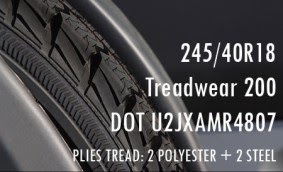
1.) 245: The numbers preceding the slash indicate the distance, in millimeters, across the widest point of the tire called section width (245mm, or 9.65 inches, in this case) when mounted on a wheel of specified width. Often listed before this number are letters that loosely signify the kind of duty for which the tire was designed: P stands for p-metric and is generally used on passenger cars, LT indicates light-truck duty, and T is for a temporary spare.


2.) 40: This two-digit number is the aspect ratio, or profile, of the sidewall. This tire's sidewall height is 40 percent of the tire's width, which equates to 98mm, or 3.86 inches. The lower the number, the shorter the sidewall. An exception is Michelin PAX tires, where this number signifies the overall diameter of the tire in millimeters.


3.) R: This letter indicates radial tire construction; nearly all tires sold today are of this variety. Other constructions are D for bias-ply tires and B for belted. A preceding Z is simply a reference to an outdated and vague speed rating of more than 240 km/h, or 149 mph (the specific rating can be found in the service description).


4.) 18: This number indicates the diameter of the wheel on which the tire should be mounted, generally in inches. These are usually whole numbers but can also be half-inch increments, such as 16.5, or in millimeters, as in 390.


5.) SERVICE DESCRIPTION: These numbers and letter together are called the service description. The numbers indicate the tire's maximum load rating, or the amount of weight the tire can bear (93 stands for 650 kilograms, or 1433 pounds), and the letter denotes the speed rating, or how fast the tires can safely rotate (W means 270 km/h, or 168 mph). The lowest rating typically found on passenger-car tires is Q, which means 99 mph. The highest, Y, is good for 186 mph, and when enclosed in parenthesis, as in (93Y), it means in excess of 186 mph. These values are determined by tire-testing machines in a lab, and the decoded load rating is also listed elsewhere on the tire.


6.) RED DOT: Here's a long-held myth that can be put to rest: It doesn't help in the balancing process to align the heavy spot of a tire often indicated with a red dot with a wheel's valve stem when mounting. Aluminum wheels are now the norm, and the valve stem is no longer the de facto lightest point.


7.) 200: The tread-wear grade is a relative figure based on the rate of wear of a tire during a 7200-mile on-vehicle test compared with that of a reference tire. The higher the number, the longer it will likely last. 300 indicates that the tire should last three times longer than the Uniroyal reference tire, which scores 100.


8.) A: A tire gets a seemingly uninformative traction grade (AA, A, B, or C) based on how much grip it generates in a straight-line test in which the tire is dragged at 40 mph across a wet surface without being allowed to rotate at all.


9.) A: This letter indicates a tire's ability to dissipate heat. As heat increases dramatically at high speed, this is, in effect, a second, less precise speed rating. A means the tire can withstand speeds over 115 mph, B is for between 100 and 115 mph, and C means between 85 to 100 mph.


10.) M+S: This stands for mud and snow and simply means that the tire has more space between the treads, which should help to facilitate traction on soft surfaces.


11.) MOUNTAIN SNOWFLAKE: Unlike the M+S rating, this icon indicates that a tire has met a minimum performance requirement in snow testing.


12.) ORIGINAL EQUIPMENT (OE) MARKING: These letters or a symbol indicate that this is the automaker-specified version of a tire that came as a car's original equipment. These tires can often be a very different blend of rubber compound compared with the off-the-shelf variety of the same tire, even though the tread pattern is identical. Examples of OE markings: General Motors' all have a TPC SPEC number; BMWs have a five-pointed-star symbol; Mercedes' some are emblazoned with M0; Porsche-all have the letter N followed by a number, i.e., N1, N2, etc.


13.) TIRE CONSTRUCTION MATERIALS: This is a required and self-explanatory list of the reinforcing materials and number of layers (in both the tread and the sidewall) that are molded into a tire's rubber for reinforcement.


14.) DOT LABEL: Every tire sold in the U.S. must have U.S. Department of Transportation (DOT) labeling. The first two characters indicate the factory of manufacture, and the next five or six are manufacturer-specific jargon (for tracking purposes, as in the case of a recall). The last four numbers give the date of production (the first two indicate which of 52 weeks, and the second two, the year). The European equivalent of the DOT code may also be present (it starts with an e), although fewer manufacturers are printing both on a tire?s sidewall (to prevent gray-market shipments when currency exchange rates fluctuate). If this string of numbers ends with -S, it means the tire complies with European noise regulations.


Here at Superior Lexus, we supply the correct tires for your Lexus at competitive prices. We continuously shop our competition in the KC market and post it here for you.


Article by DAVE VANDERWERP


Car and Driver, November 2009


Original article is here at http://www.caranddriver.com/reviews/car/09q3/how_to_read_a_tire_sidewall-feature