Crafted without restraint or compromise, the Lexus ES raises
expectations and eyebrows. The craftsmanship of the ES can be seen in every
detail. With 40 MPG EPA estimated combined rating, you can go further than
before. If you are looking for the best of the best, you’ve reached it with the
available Luxury Package. Luxurious seating finishes makes every seat the best
one in house, and the extra-spacious rear-seat legroom will make every
passengers’ experience one-of-a-kind. Hands-free technology makes driving the
ES a breeze and something to look forward to. Get more out of what you want
with the personalized luxury options that come with the ES. What are you
waiting for? Experience top-of-the-line luxury today!
Showing posts with label Hendrick Automotive Group. Show all posts
Friday, June 5, 2015
Monday, June 3, 2013
HENDRICK
AUTOMOTIVE GROUP OPENS NEW
HENDRICK LEXUS KANSAS CITY FACILITY
Completes
Transition of all Kansas City Dealerships to Hendrick Name
MERRIAM, Kan., June 3, 2013
– Hendrick Automotive Group opened the new Hendrick Lexus Kansas City located
at 6935 West Frontage Road in Merriam today. Formerly Superior Lexus, Hendrick
Lexus Kansas City, and its sister store, Hendrick Lexus Kansas City North,
formerly Superior Lexus North, are the final two Hendrick Automotive Group
dealerships to transition to the Hendrick name in the Kansas City market.
“We are so proud of this new
facility, with its modern two-story showroom, and what it offers our Kansas
City customers,” said Rick Hendrick, Chairman of Hendrick Automotive Group and
Owner of Hendrick Motorsports. “I’ve always enjoyed the Kansas City area.
Hendrick Automotive Group opened its first dealership here in 1992, and Hendrick
Motorsports won the first NASCAR race here in 2001. The city has always been
very good to us. We’re committed to the people here and are optimistic about
the future.”
Hendrick Lexus Kansas City will offer more than 400 new and
pre-owned cars on site, plus access to the entire Hendrickcars.com inventory of
more than 6,000 pre-owned vehicles. The 68,500-square-foot dealership has 38
service bays on its more than eight-acre lot. The state-of-the-art dealership
is the newest facility for Hendrick Automotive Group, which currently operates
87 dealerships and 121 franchises across 12 states.
General Manager Phil Humbert will
continue to oversee Hendrick Lexus Kansas City. Humbert has been with Hendrick
Automotive Group since 1999 and was promoted to general manager of Hendrick
Lexus Kansas City in 2000.
“Our new Lexus facility has more
than doubled the capacity of vehicle selection and service bays than our
previous location,” said Humbert. “The new store has a welcoming, larger
waiting area and more than 65 current-model loaner vehicles to exceed
customers’ expectations. The location, next to our Toyota dealership on I-35
and 67th Street, is convenient, as well.”
Hendrick Automotive Group entered
the Kansas City market in 1992 and currently operates eight dealerships there:
Hendrick Acura Overland Park, Hendrick Chevrolet Shawnee Mission, Hendrick
Nissan Kansas City, Hendrick Toyota Scion Merriam, Hendrick Buick GMC Cadillac,
Hendrick Volvo of Kansas City, Hendrick Lexus Kansas City and Hendrick Lexus Kansas
City North. In 2012, these eight dealerships sold more than 11,000 new and
pre-owned vehicles with combined sales revenue of more than $500 million.
Hendrick also operates three
collision centers in the area: Hendrick Collision Center, a stand-alone facility,
as well as Hendrick Collision Center at Hendrick Lexus Kansas City North, and
another at Hendrick Chevrolet Shawnee Mission. More than 140,000 vehicles were
serviced by Hendrick Automotive Group technicians.
More than 750 people are employed by Hendrick Automotive
Group in the Kansas City area. Currently, 29 positions are available in the
eight Kansas City dealerships and are listed at www.hendrickcareers.com.
For more information on the new
Hendrick Lexus Kansas City facility, please visit www.hendricklexuskansascity.com,
follow them on Twitter or like them on Facebook.
Tuesday, June 26, 2012
ALL NEW 2013 LEXUS ES COMING SOON!
The all-new 2013 Lexus ES is much more than meets the eye. Here are eight videos showcasing some of the leading technologies that are making heads turn in the luxury vehicle market.
Wednesday, May 9, 2012
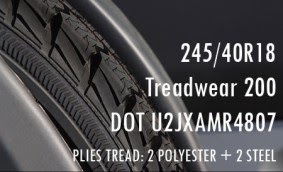
WEDNESDAY WISDOM: HOW TO READ A TIRE SIDEWALL
How To Read a Tire Sidewall
There's probably a lot more information on a tire's sidewall than you're aware of, such as where the tire was made and when, and sometimes, even whether your tire complies with pass-by noise regulations in Europe.
Here's how to decode it all:
1.) 245: The numbers preceding the slash indicate the distance, in millimeters, across the widest point of the tire called section width (245mm, or 9.65 inches, in this case) when mounted on a wheel of specified width. Often listed before this number are letters that loosely signify the kind of duty for which the tire was designed: P stands for p-metric and is generally used on passenger cars, LT indicates light-truck duty, and T is for a temporary spare.
2.) 40: This two-digit number is the aspect ratio, or profile, of the sidewall. This tire's sidewall height is 40 percent of the tire's width, which equates to 98mm, or 3.86 inches. The lower the number, the shorter the sidewall. An exception is Michelin PAX tires, where this number signifies the overall diameter of the tire in millimeters.
3.) R: This letter indicates radial tire construction; nearly all tires sold today are of this variety. Other constructions are D for bias-ply tires and B for belted. A preceding Z is simply a reference to an outdated and vague speed rating of more than 240 km/h, or 149 mph (the specific rating can be found in the service description).
4.) 18: This number indicates the diameter of the wheel on which the tire should be mounted, generally in inches. These are usually whole numbers but can also be half-inch increments, such as 16.5, or in millimeters, as in 390.
5.) SERVICE DESCRIPTION: These numbers and letter together are called the service description. The numbers indicate the tire's maximum load rating, or the amount of weight the tire can bear (93 stands for 650 kilograms, or 1433 pounds), and the letter denotes the speed rating, or how fast the tires can safely rotate (W means 270 km/h, or 168 mph). The lowest rating typically found on passenger-car tires is Q, which means 99 mph. The highest, Y, is good for 186 mph, and when enclosed in parenthesis, as in (93Y), it means in excess of 186 mph. These values are determined by tire-testing machines in a lab, and the decoded load rating is also listed elsewhere on the tire.
6.) RED DOT: Here's a long-held myth that can be put to rest: It doesn't help in the balancing process to align the heavy spot of a tire often indicated with a red dot with a wheel's valve stem when mounting. Aluminum wheels are now the norm, and the valve stem is no longer the de facto lightest point.
7.) 200: The tread-wear grade is a relative figure based on the rate of wear of a tire during a 7200-mile on-vehicle test compared with that of a reference tire. The higher the number, the longer it will likely last. 300 indicates that the tire should last three times longer than the Uniroyal reference tire, which scores 100.
8.) A: A tire gets a seemingly uninformative traction grade (AA, A, B, or C) based on how much grip it generates in a straight-line test in which the tire is dragged at 40 mph across a wet surface without being allowed to rotate at all.
9.) A: This letter indicates a tire's ability to dissipate heat. As heat increases dramatically at high speed, this is, in effect, a second, less precise speed rating. A means the tire can withstand speeds over 115 mph, B is for between 100 and 115 mph, and C means between 85 to 100 mph.
10.) M+S: This stands for mud and snow and simply means that the tire has more space between the treads, which should help to facilitate traction on soft surfaces.
11.) MOUNTAIN SNOWFLAKE: Unlike the M+S rating, this icon indicates that a tire has met a minimum performance requirement in snow testing.
12.) ORIGINAL EQUIPMENT (OE) MARKING: These letters or a symbol indicate that this is the automaker-specified version of a tire that came as a car's original equipment. These tires can often be a very different blend of rubber compound compared with the off-the-shelf variety of the same tire, even though the tread pattern is identical. Examples of OE markings: General Motors' all have a TPC SPEC number; BMWs have a five-pointed-star symbol; Mercedes' some are emblazoned with M0; Porsche-all have the letter N followed by a number, i.e., N1, N2, etc.
13.) TIRE CONSTRUCTION MATERIALS: This is a required and self-explanatory list of the reinforcing materials and number of layers (in both the tread and the sidewall) that are molded into a tire's rubber for reinforcement.
14.) DOT LABEL: Every tire sold in the U.S. must have U.S. Department of Transportation (DOT) labeling. The first two characters indicate the factory of manufacture, and the next five or six are manufacturer-specific jargon (for tracking purposes, as in the case of a recall). The last four numbers give the date of production (the first two indicate which of 52 weeks, and the second two, the year). The European equivalent of the DOT code may also be present (it starts with an e), although fewer manufacturers are printing both on a tire?s sidewall (to prevent gray-market shipments when currency exchange rates fluctuate). If this string of numbers ends with -S, it means the tire complies with European noise regulations.
Here at Superior Lexus, we supply the correct tires for your Lexus at competitive prices. We continuously shop our competition in the KC market and post it here for you.
Article by DAVE VANDERWERP
Car and Driver, November 2009
Original article is here at http://www.caranddriver.com/reviews/car/09q3/how_to_read_a_tire_sidewall-feature
There's probably a lot more information on a tire's sidewall than you're aware of, such as where the tire was made and when, and sometimes, even whether your tire complies with pass-by noise regulations in Europe.
Here's how to decode it all:
1.) 245: The numbers preceding the slash indicate the distance, in millimeters, across the widest point of the tire called section width (245mm, or 9.65 inches, in this case) when mounted on a wheel of specified width. Often listed before this number are letters that loosely signify the kind of duty for which the tire was designed: P stands for p-metric and is generally used on passenger cars, LT indicates light-truck duty, and T is for a temporary spare.
2.) 40: This two-digit number is the aspect ratio, or profile, of the sidewall. This tire's sidewall height is 40 percent of the tire's width, which equates to 98mm, or 3.86 inches. The lower the number, the shorter the sidewall. An exception is Michelin PAX tires, where this number signifies the overall diameter of the tire in millimeters.
3.) R: This letter indicates radial tire construction; nearly all tires sold today are of this variety. Other constructions are D for bias-ply tires and B for belted. A preceding Z is simply a reference to an outdated and vague speed rating of more than 240 km/h, or 149 mph (the specific rating can be found in the service description).
4.) 18: This number indicates the diameter of the wheel on which the tire should be mounted, generally in inches. These are usually whole numbers but can also be half-inch increments, such as 16.5, or in millimeters, as in 390.
5.) SERVICE DESCRIPTION: These numbers and letter together are called the service description. The numbers indicate the tire's maximum load rating, or the amount of weight the tire can bear (93 stands for 650 kilograms, or 1433 pounds), and the letter denotes the speed rating, or how fast the tires can safely rotate (W means 270 km/h, or 168 mph). The lowest rating typically found on passenger-car tires is Q, which means 99 mph. The highest, Y, is good for 186 mph, and when enclosed in parenthesis, as in (93Y), it means in excess of 186 mph. These values are determined by tire-testing machines in a lab, and the decoded load rating is also listed elsewhere on the tire.
6.) RED DOT: Here's a long-held myth that can be put to rest: It doesn't help in the balancing process to align the heavy spot of a tire often indicated with a red dot with a wheel's valve stem when mounting. Aluminum wheels are now the norm, and the valve stem is no longer the de facto lightest point.
7.) 200: The tread-wear grade is a relative figure based on the rate of wear of a tire during a 7200-mile on-vehicle test compared with that of a reference tire. The higher the number, the longer it will likely last. 300 indicates that the tire should last three times longer than the Uniroyal reference tire, which scores 100.
8.) A: A tire gets a seemingly uninformative traction grade (AA, A, B, or C) based on how much grip it generates in a straight-line test in which the tire is dragged at 40 mph across a wet surface without being allowed to rotate at all.
9.) A: This letter indicates a tire's ability to dissipate heat. As heat increases dramatically at high speed, this is, in effect, a second, less precise speed rating. A means the tire can withstand speeds over 115 mph, B is for between 100 and 115 mph, and C means between 85 to 100 mph.
10.) M+S: This stands for mud and snow and simply means that the tire has more space between the treads, which should help to facilitate traction on soft surfaces.
11.) MOUNTAIN SNOWFLAKE: Unlike the M+S rating, this icon indicates that a tire has met a minimum performance requirement in snow testing.
12.) ORIGINAL EQUIPMENT (OE) MARKING: These letters or a symbol indicate that this is the automaker-specified version of a tire that came as a car's original equipment. These tires can often be a very different blend of rubber compound compared with the off-the-shelf variety of the same tire, even though the tread pattern is identical. Examples of OE markings: General Motors' all have a TPC SPEC number; BMWs have a five-pointed-star symbol; Mercedes' some are emblazoned with M0; Porsche-all have the letter N followed by a number, i.e., N1, N2, etc.
13.) TIRE CONSTRUCTION MATERIALS: This is a required and self-explanatory list of the reinforcing materials and number of layers (in both the tread and the sidewall) that are molded into a tire's rubber for reinforcement.
14.) DOT LABEL: Every tire sold in the U.S. must have U.S. Department of Transportation (DOT) labeling. The first two characters indicate the factory of manufacture, and the next five or six are manufacturer-specific jargon (for tracking purposes, as in the case of a recall). The last four numbers give the date of production (the first two indicate which of 52 weeks, and the second two, the year). The European equivalent of the DOT code may also be present (it starts with an e), although fewer manufacturers are printing both on a tire?s sidewall (to prevent gray-market shipments when currency exchange rates fluctuate). If this string of numbers ends with -S, it means the tire complies with European noise regulations.
Here at Superior Lexus, we supply the correct tires for your Lexus at competitive prices. We continuously shop our competition in the KC market and post it here for you.
Article by DAVE VANDERWERP
Car and Driver, November 2009
Original article is here at http://www.caranddriver.com/reviews/car/09q3/how_to_read_a_tire_sidewall-feature
Thursday, March 29, 2012
UP CLOSE AND PERSONAL
Meet our Operations Manager - Rick Ulin
How long have you been with Superior Lexus? ON AND OFF 8 YEARS
What was your first car? 1964 FORD PICK UP
Where did you grow up? MILITARY BRAT BUT I CALL THE KANSAS CITY AREA HOME
What is your favorite movie? VACATION
What do you like to do for fun outside of work? FISH AND DRIVE MY CHEVELLE
Who is your favorite athlete? DREW BREES
What is 1 thing on your bucket list? GO TO HAWAII
What is your favorite customer story? DR. PETERSON BRINGING HIS CHILD HOME IN HIS LS400 AT BIRTH, AND THEN GIVING HER THE SAME CAR WHEN SHE BECAME OLD ENOUGH TO DRIVE
What car do you drive now? 1972 CHEVELLE SS….. OH AND MY 2012 LEXUS RX350
Tell me what you love the most about working at Superior Lexus? GREAT PEOPLE, GREAT COMPANY, GREAT PRODUCT……THE TRIFECTA!
Tuesday, February 21, 2012
HendrickCars.com 2012 Indy Dream Weekend Sweepstakes
EXCITING NEWS FOR RACE FANS! The newly redesigned HendrickCars.com is the fastest way to research and purchase nearly 20,000 new and used cars, classic cars, commercial vehicles and motorcycles from the inventory of Hendrick Automotive Group’s more than 100 franchises, including Superior Lexus!
A new sweepstakes from HendrickCars.com is now open and taking entries! From February 13 through March 19, visitors to HendrickCars.com can log on to register for a chance to win a weekend for two at the July 29 Sprint Cup race in Indianapolis. The winner and a guest will receive behind-the-scenes access, a tour of the historic racing venue, VIP seats in a trackside suite and more. The winner will be announced March 23 at http://www.hendrickcars.com/! Log on today and submit your entry to win!
Coinciding with the sweepstakes, Hendrickcars.com is sponsoring three NASCAR teams in select races in early 2012 to promote the new-look retail automotive website, which re-launched February 1. Primary sponsorship of Phoenix Racing and 2004 NASCAR Sprint Cup champion Kurt Busch in the February 25 Nationwide Series race and February 26 Daytona 500. Further sponsorship goes to JR Motorsports and driver Cole Whitt in the March 17 Nationwide even at Bristol, Tennessee.
In addtion, HendrickCars.com will be a major associate sponsor of the Richard Childress Racing No. 33 Chevrolet with driver Elliott Sadler in NASCAR's biggest race, the Daytona 500.
Features of the new HendrickCars.com include streamlined navigation, an expanded offering of used cars and the addition of thousands of new vehicles. The site also has added performance and classic cars, commercial vehicles and motorcycles to its inventory. Customers can view detailed information for nearly 20,000 vehicles, including up to 60 images per listing.
“We’re proud to have HendrickCars.com as our primary sponsor for both races in Daytona,” said James Finch, Owner of Phoenix Racing. “The Hendrick people know how well sponsorships like this work when they’re done the right way. Daytona is a big opportunity for our team to build some positive momentum to start the season. Having a sponsor for Speedweeks means a lot to us, and we’re going to do everything we can to put HendrickCars.com up front.”
Subscribe to:
Posts (Atom)